Verzija članka na hrvatskom jeziku
Take us back to the beginning, before the signatures and the headlines. When did the idea for My Voice, My Choice first take shape? What convinced you that a European Citizens’ Initiative was the right tool?
The idea for My Voice, My Choice was born while I was living and studying in the US. At that exact time, Roe v. Wade was overturned – the US Supreme Court held that the Constitution does not confer a right to abortion and, with that decision, took away reproductive rights from women. It was a huge shock because civil liberties suddenly took a step backwards. No one expected that something like that could happen in such a manner. That event made me think we should do something to make sure the European Union does not follow the US’s path. Together with my friends, I realized that the European Citizens’ Initiative was the right choice for action. It is a legal way that allows the public to propose a change to the European Commission – 1 million signatures are required to put the topic on their agenda. Since 20 million women across Europe do not have access to safe abortion, and many are dying or even being imprisoned, we felt strongly about the issue and knew something must be done.

Building a campaign across 27 EU member states is an enormous undertaking. Who were the first people who believed in this vision? How did the coalition grow from an idea into a pan-European movement?
I am lucky to be surrounded by friends who are also feminists and believe that not a single person should die because of denied healthcare. I started the campaign with my friend Sara from France, and soon other friends joined us, as well as people from different countries who helped us build the coalition. We knew that ambassadors were needed, and in that regard, I would like to mention Croatian singer Severina. Not many people believed that we could collect 1 million signatures, but she supported the initiative from the start and publicly advocated for our cause on many occasions. Another person who helped tremendously is Aleksander Čeferin, the president of UEFA. I’d also like to add that it was not the big NGOs pushing the campaign – the biggest support came from small organisations and individuals doing everything in their power to help.
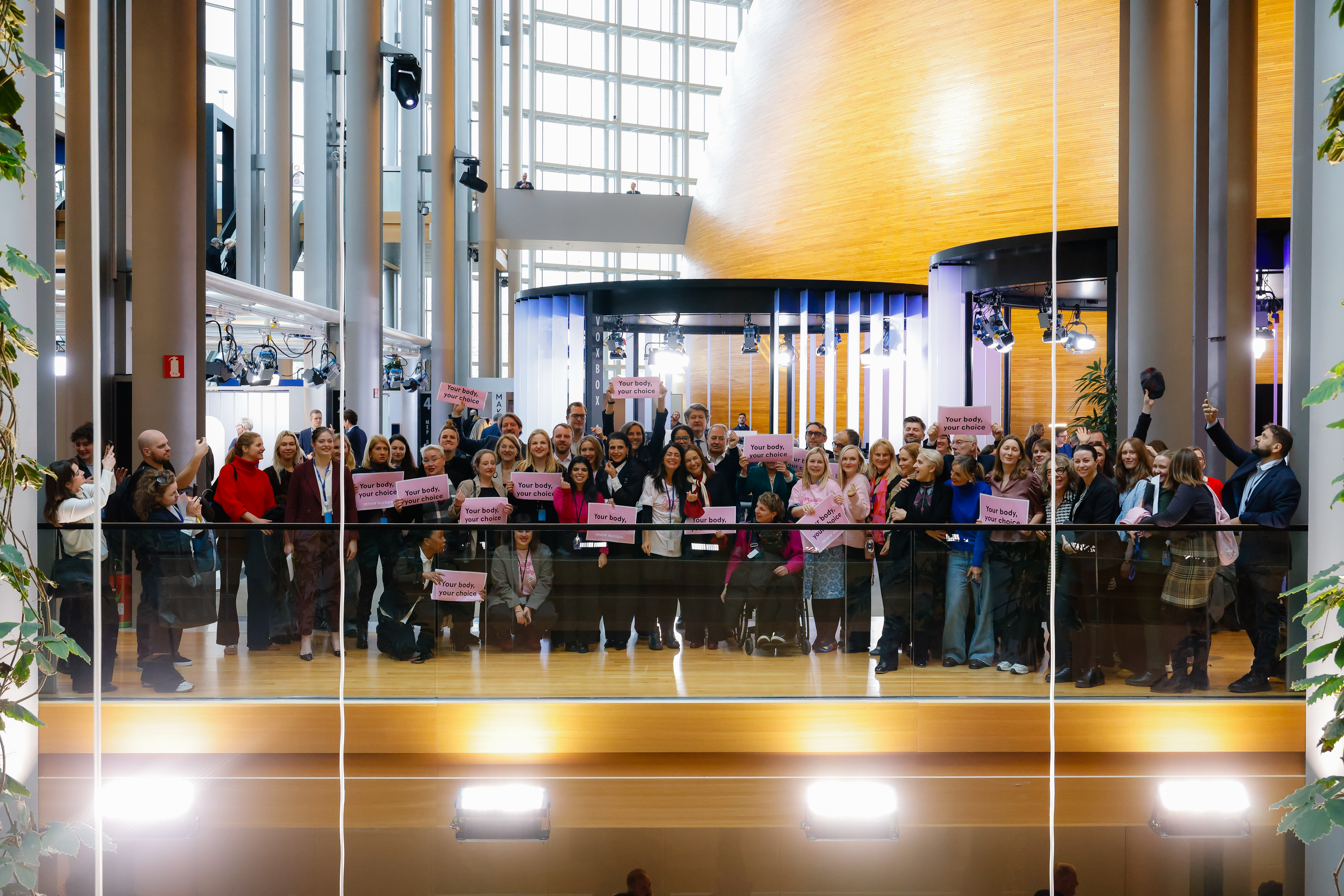
Surpassing one million signatures is historic. Was there a particular moment when you realized this campaign had crossed from activism into political momentum?
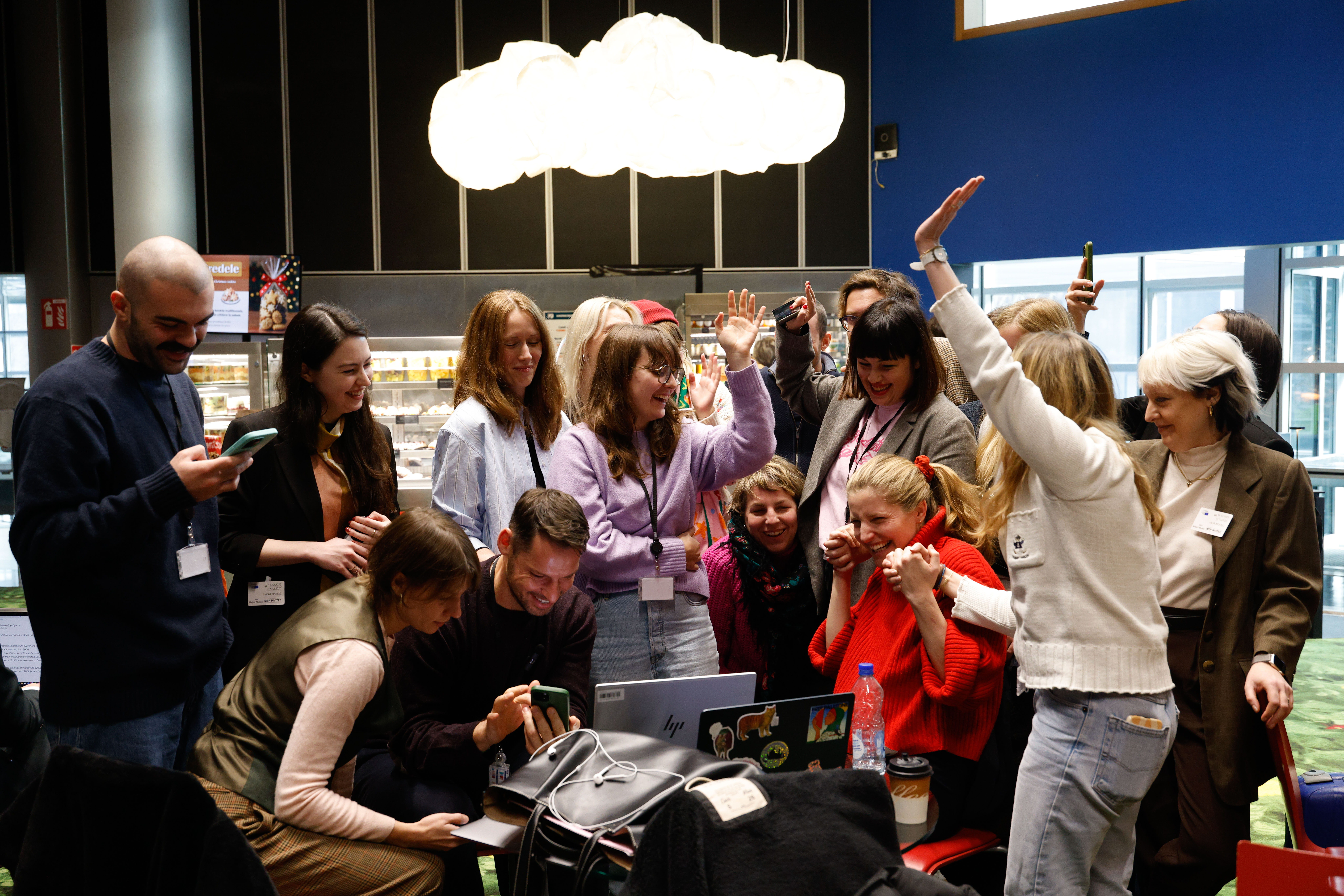
The first such moment had happened on “Safe Abortion Day”, way before we collected 1 million signatures. The campaign had just begun – we were collecting signatures in the streets, talking to people who decided to support the initiative, getting to know them. It was amazing, volunteers from every single country of the EU joined in to help. The next big moment was, of course, the day we realized we’d done it – 1 million signatures successfully collected! It showed us the power of unity and what can be accomplished if we work together. The third big moment was the moment the vote passed in the European Parliament – women across the political spectrum, from the left to the right, were celebrating, hugging each other, and cheering. That’s when we knew we’d built something bigger than all of us, which goes beyond individual political convictions.
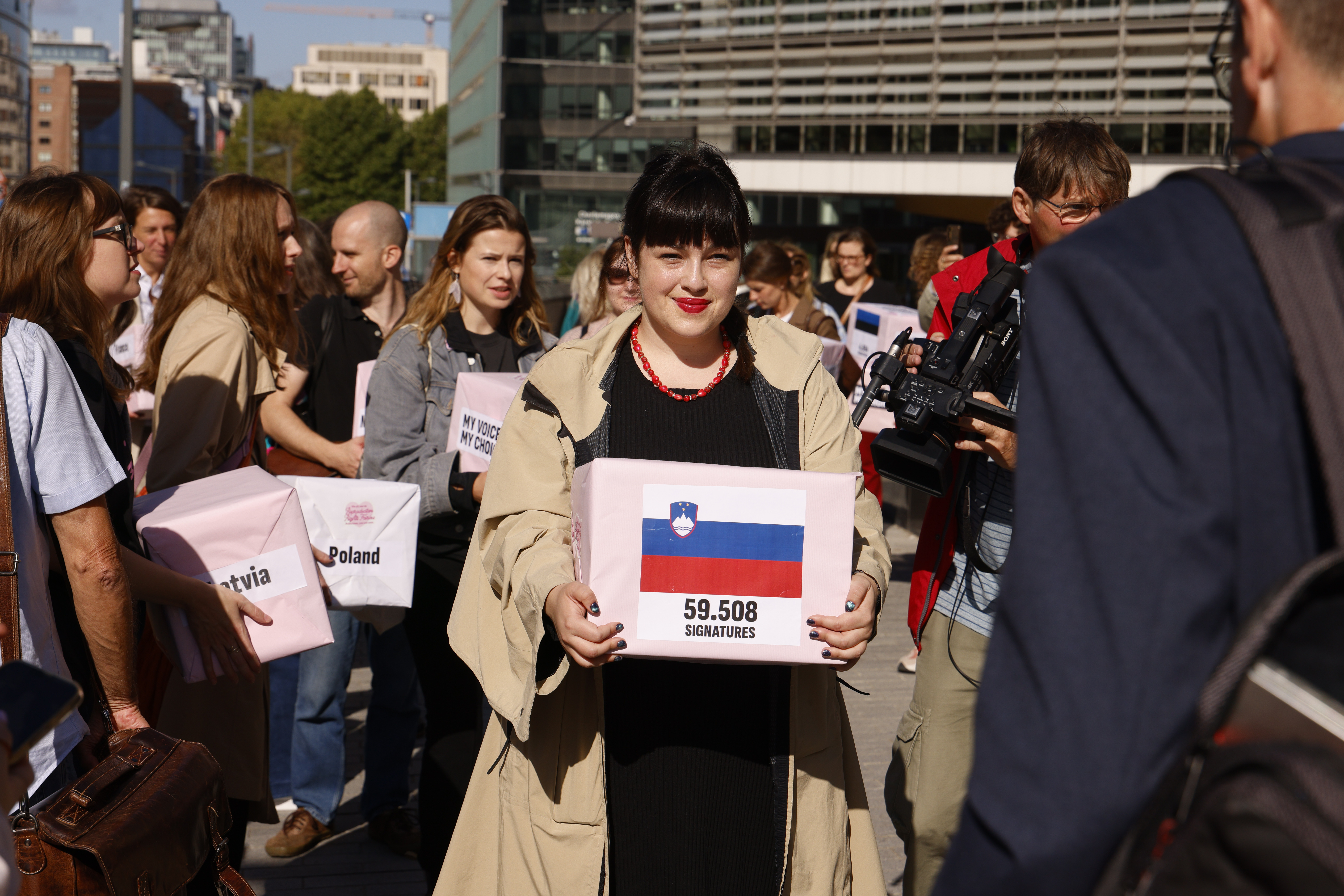
Personally, I was extremely pleased that my country, Croatia, collected more than 65, 000 signatures – 780% above the national threshold. In your opinion, do figures like these reflect the true public attitude toward safe abortion, despite the opposition’s attempts to present a very different narrative?
Our experience with neo-conservative movements is that they are super small and super loud, so they manage to create an impression that their ideology is the dominant one. But the reality is very different – the majority of people in Europe support safe and accessible abortion, and the statistics continue to prove it – 75 % of people in Europe believe abortion is a legal right. Croatia was one of the most successful countries in collecting signatures for My Voice, My Choice. Since many women in Croatia are unable to exercise their legal right due to the majority of doctors invoking the “conscience clause”, it doesn’t come as a surprise that so many people decided to mobilize in support of the initiative, recognizing it as a necessary step toward ensuring that reproductive rights are not merely theoretical but genuinely accessible.
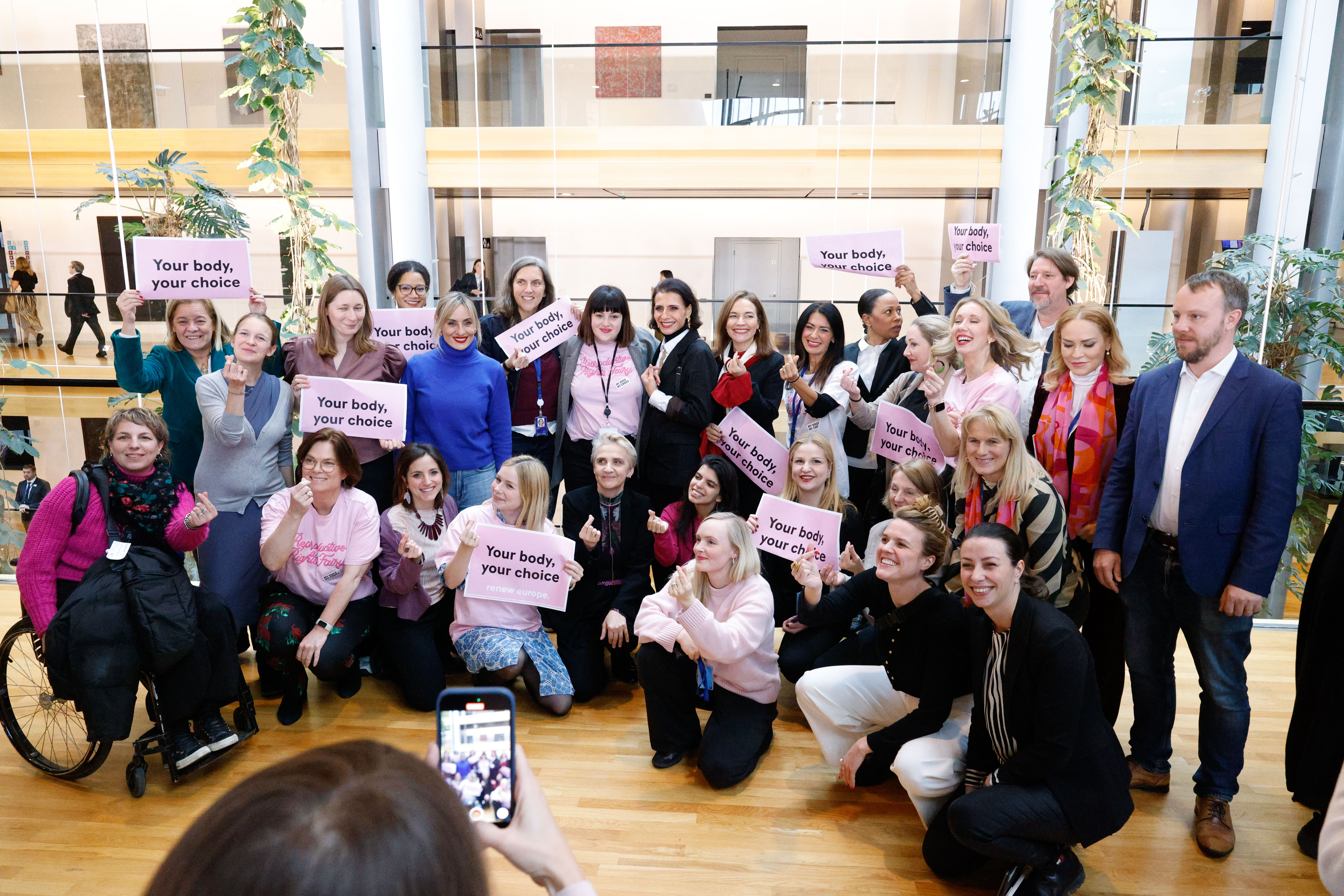
The European Parliament recently voted in support of My Voice, My Choice, marking a significant political moment for the campaign. What impact has the parliamentary support had on the movement’s momentum and on public perception across Europe?
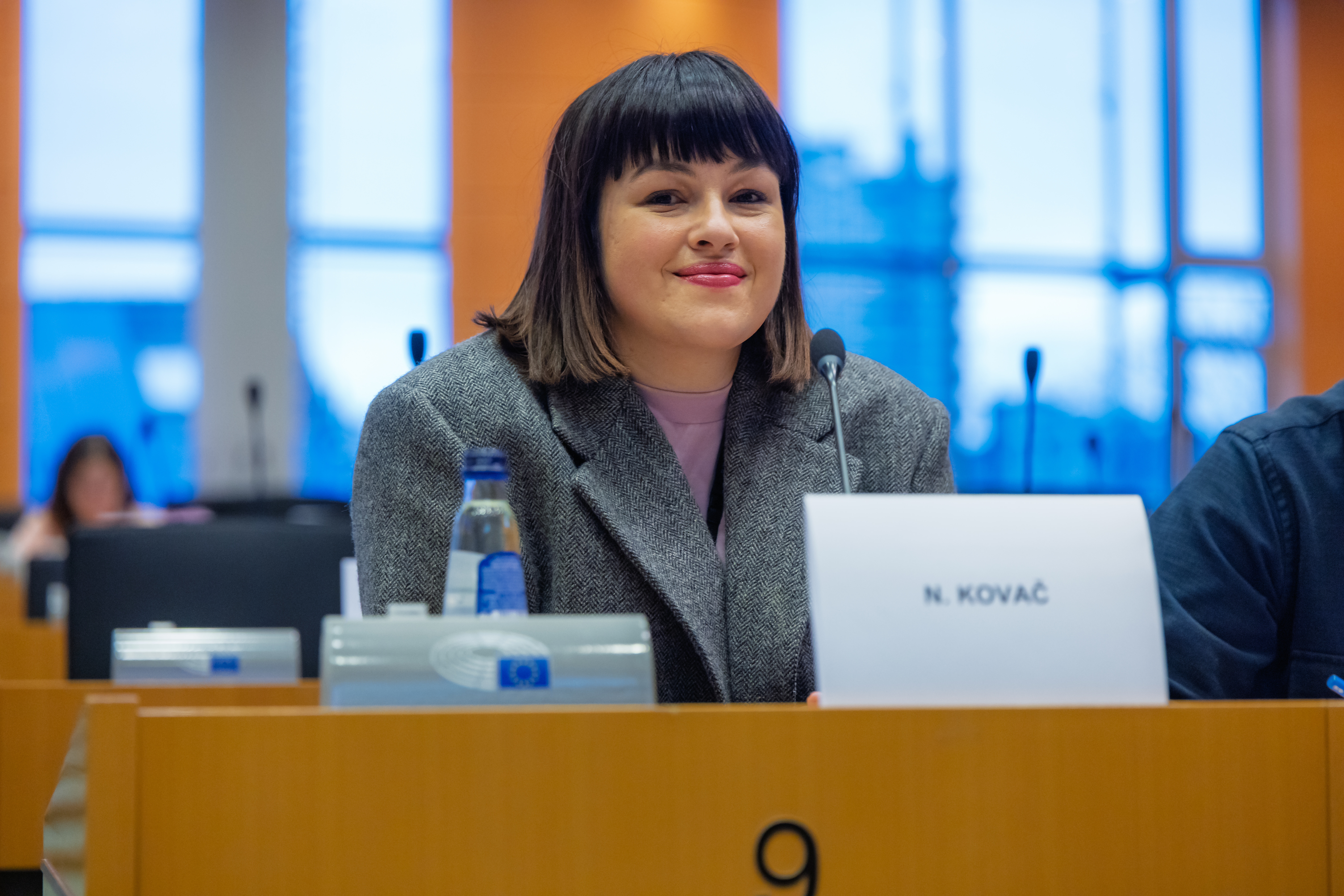
The vote in the European parliament was incredibly important because it has clearly shown that the question of safe and accessible abortion is not some left vs. right issue, but a broadly supported principle of public health and human dignity. We had conservative members of the Parliament voting in favour, we had liberal members of the Parliament voting in favour – together they have sent the message that women’s lives should not be sacrificed. It was a sign of public consensus that reproductive rights must be protected.
At the same time, reproductive rights remain a deeply polarizing topic. What have been the most challenging obstacles – whether from institutions, governments, or organized opposition – that you’ve had to navigate?
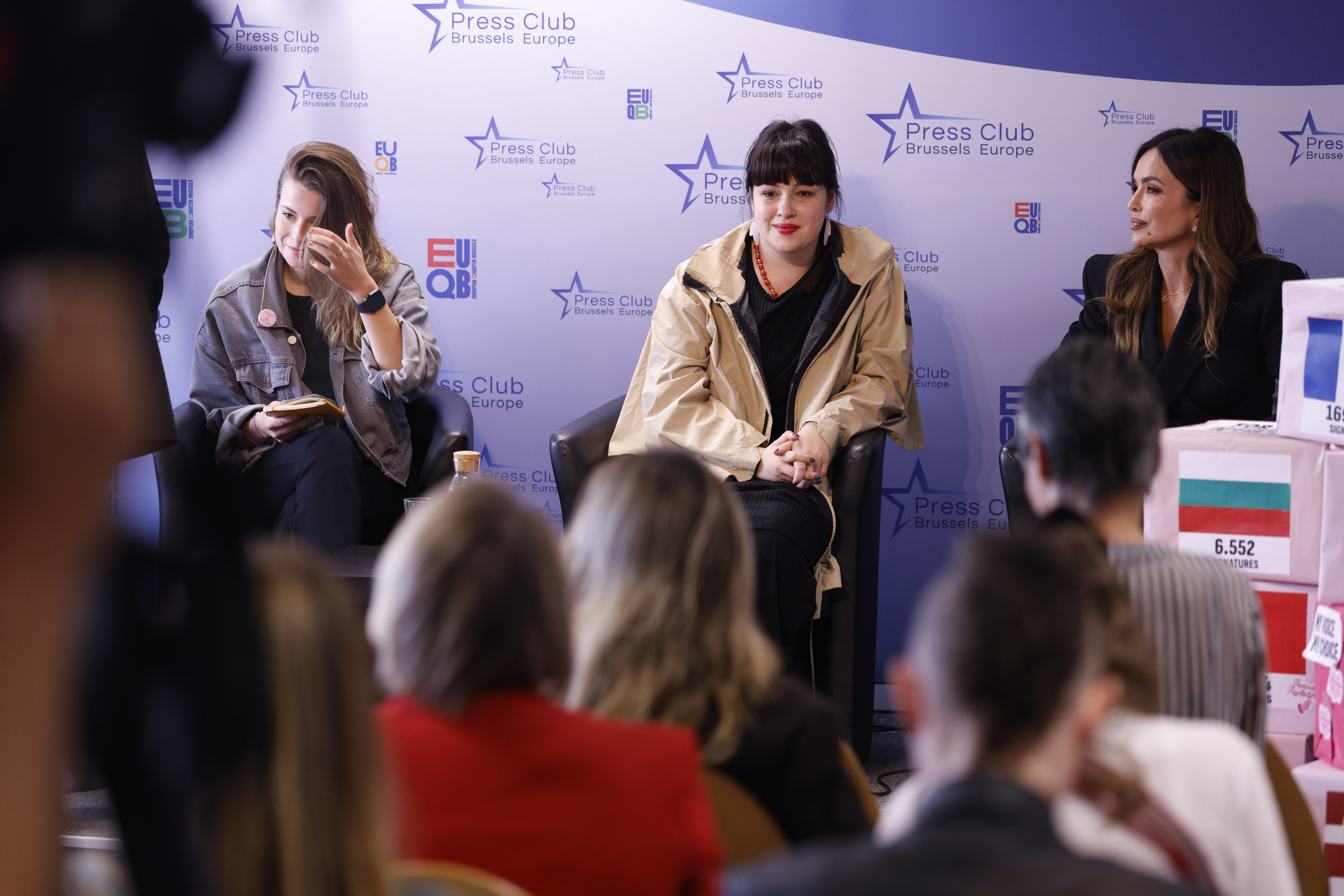
Ever since the campaign started, we’ve been facing many obstacles. The biggest problem with those opposing My Voice, My Choice is that they rarely express their disagreement civilly. Instead, they resort to violence. We get a lot of hate mail, both online and offline, and we get a lot of violent threats. Recently, deepfake images and videos of me have been made – the context is extremely sexually explicit and degrading. Despite it all, we persevere. Another challenge lies within the social media platforms themselves, particularly in the way content is moderated and presented to the audience. Official My Voice, My Choice profiles have frequently been subject to shadow banning, limiting our reach and restricting our ability to communicate effectively with the public.
You have faced personal attacks, including AI-generated pornographic content targeting you. How did that experience affect you, both as an activist and as a person? Do you perceive it as part of a broader pattern of gendered attacks against women in public life?
I have been an activist for almost 10 years, and during that time I’ve experienced many frightful things – physical attacks, death threats, threats to my family and friends, and now, on top of it all, AI-generated images and videos. It’s a sad thing to say, but I’ve gotten used to most of it. Out of all those things, AI scares me the most – it changed the rules of the game, and nowadays it is possible to create a completely false reality. Some days are harder than others; it becomes difficult to look yourself in the mirror, to go out among people, and to function properly. But I am aware that those are simply intimidation tactics. Each time you speak out and question the system, especially if you are a woman, there will be a backlash, but we stand firm and will keep fighting for what’s right.
In moments of hostility and intimidation, what keeps you grounded? How do you cope with the weight of being both the public face and a symbolic target of the initiative?
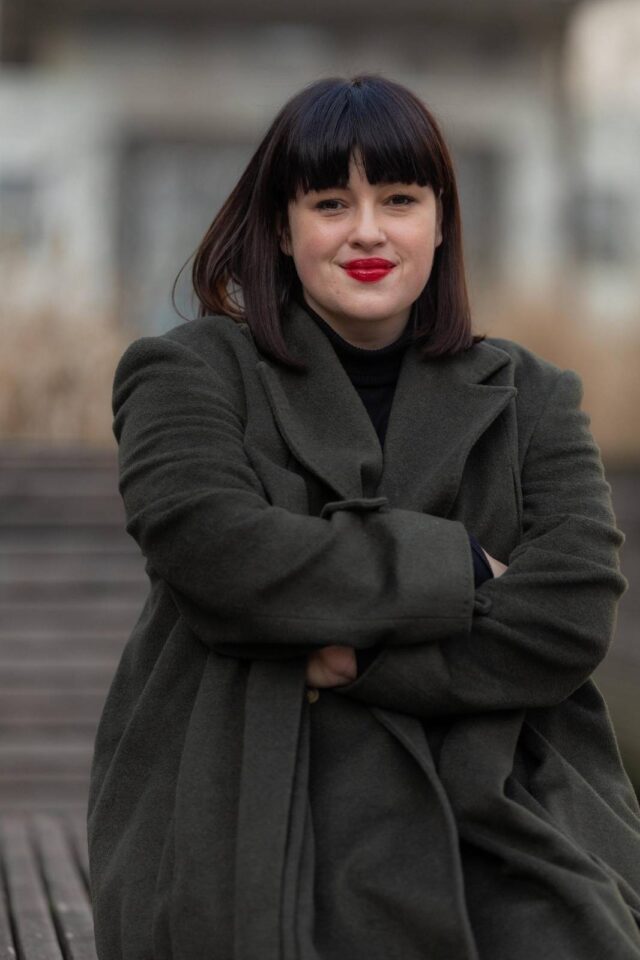
I try my best to have a life beyond the initiative. I have an amazing group of friends whose support means a lot – with them, I can be a regular, private person. Books help too; I read a lot in my free time. Also, I tend to limit my time on social media and try not to pay attention to hateful comments and messages.
Critics argue that abortion policy should remain solely a national competence. How do you respond to that argument, and why do you believe European-level action is necessary?
The initiative My Voice, My Choice is not interfering with any national competencies, as the European Commission clearly stated in 2024 when it authorised us to collect signatures. The claim of interference is one of many fake news stories being spread by those opposing reproductive rights. What needs to be understood is that we are advocating a voluntary mechanism under which each country can decide for itself whether to join. Therefore, we are not interfering with any national competencies whatsoever.
Apart from advocating for safe and accessible abortion, are there any other issues you hope to address, both personally and as a part of the My Voice, My Choice initiative?
Personally, I’d like to campaign against hate speech, deepfakes, and the growing use of AI-generated pornographic content. As far as My Voice, My Choice goes, our primary goal is to win this fight, and then we’ll discuss our next step. One secret I can share with you is that we plan on being vocal about other important issues, such as the protection of victims of sexual assault and the fight against deepfakes. Most of all, we hope to stay connected with all the wonderful people who have supported us and continue to do so.
On 26 February, the European Commission will deliver its final decision on the initiative. On what levels do you think this decision will shape the future of reproductive rights in the EU? Do you see it as a test of the EU’s democratic mechanisms?
The My Voice, My Choice initiative has shown several things. Firstly, Europe is not as divided as we might have thought when it comes to reproductive rights. Secondly, real change can be achieved with collaboration. Thirdly, this can be done by respecting and following democratic mechanisms. By rallying behind the initiative and signing the petition, the people have voiced their opinion. Right now, everything is in the hands of the European Commission. If they decide against My Voice, My Choice, it will essentially go against the clear will of EU citizens. I believe this is a major test for European democratic mechanisms and for our society as a whole. On 26 February, the EU will show which direction it wants to take and what kind of Europe we’re building – a Europe where the lives of women are respected, or a Europe where women are still second-class citizens.